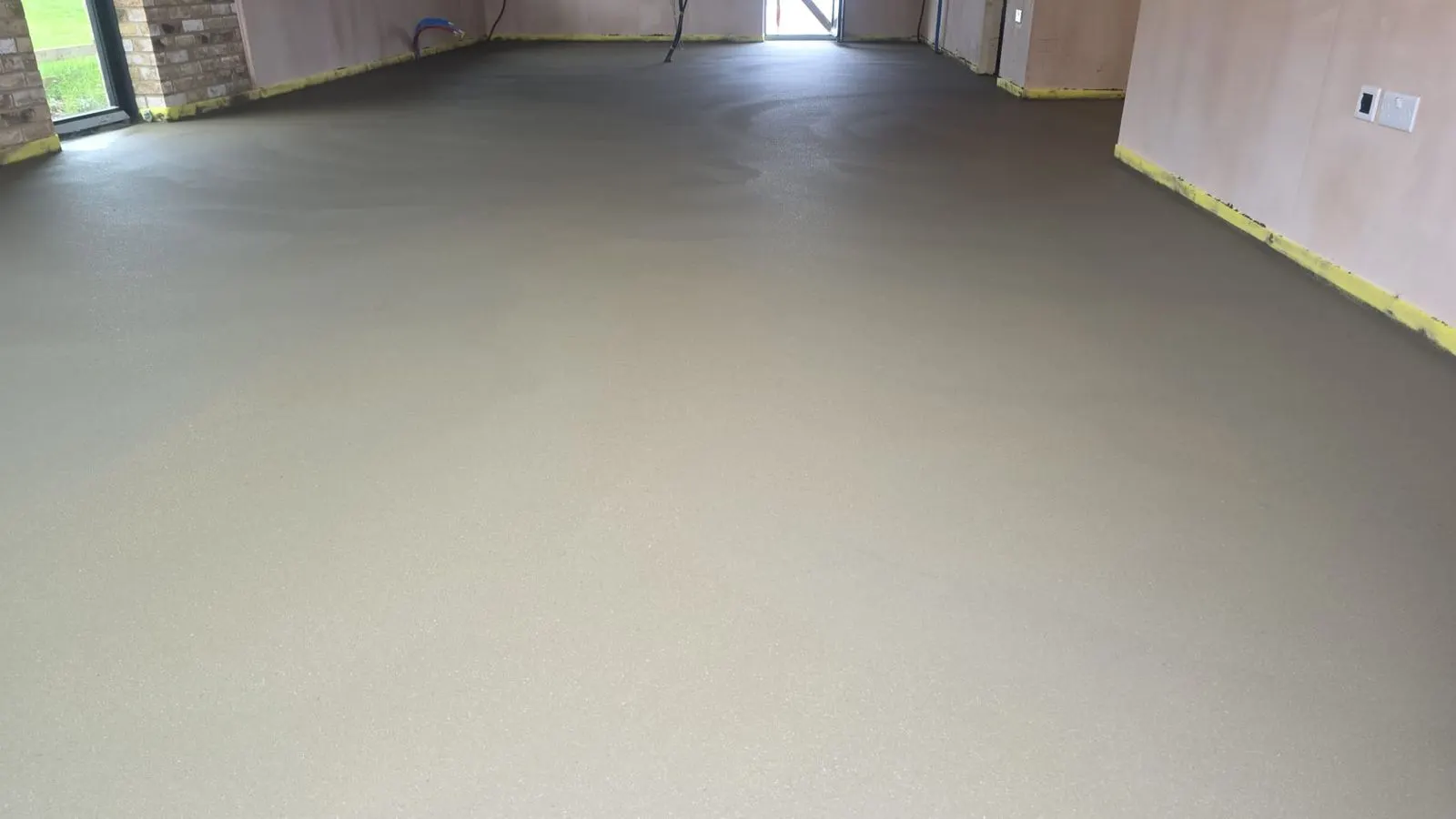
Freshly laid smooth screed floor across an open-plan room ready for testing

Screed Test by CSC Screeding

Screed Test. Certainty Delivered.

Know your screed is dry, sound, level and flat before the floor finish goes down. Independent testing backed by the Screed Scientist.

Book a Screed Test

The perfect start to a perfect finish.

Handover ready for floor finish

A screed only does its job if the floor finish laid on it performs. Laying resin, vinyl, timber or carpet on a screed that is still too wet, too weak or out of tolerance is how floors fail: lifting, blistering, cracking and costly rework that knocks the programme off course.

Screed Test removes the guesswork. We test the screed for moisture, surface soundness, level and flatness, and give you a clear written record so the main contractor, flooring contractor and client all know where the floor stands at handover. Guesswork, a hand on the surface or a date on the programme won’t do. The answer comes from a proper test.

CSC Screeding was established in 1987 and has delivered over 2,900 projects since 2010.
Our tests

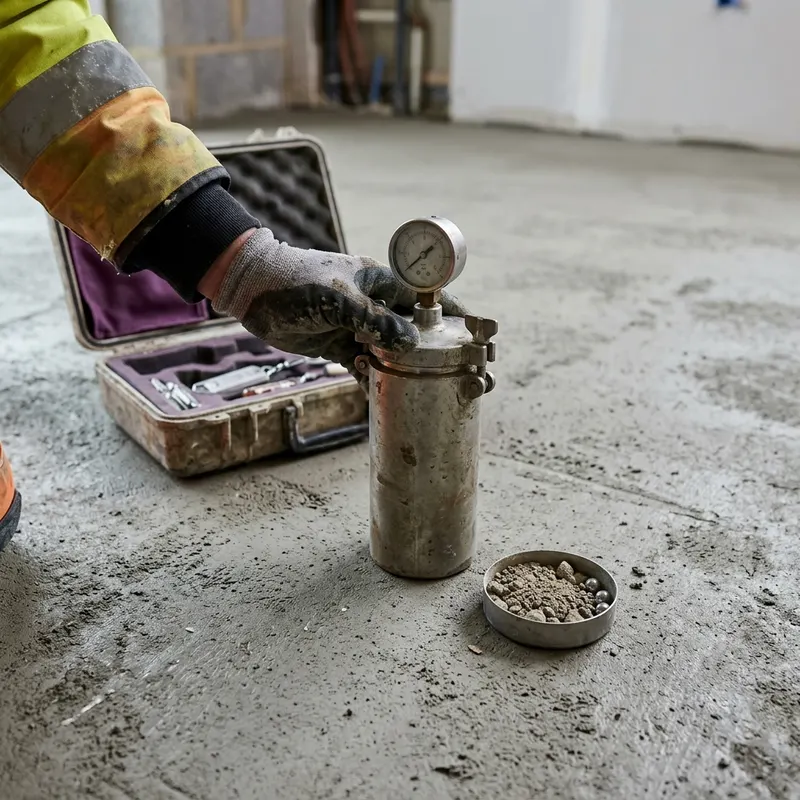
Calcium carbide moisture test flask with pressure gauge beside a screed sample on a freshly laid screed floor

1. Calcium Carbide (CM) testing

What it measures
The actual moisture content of the screed, as a percentage, from a sample taken through the full depth of the screed.
How it works
A weighed sample is sealed in a flask with calcium carbide reagent and steel balls and shaken. Moisture reacts with the carbide to produce gas; the gauge pressure converts to moisture content.
When you need it
Before moisture-sensitive finishes such as resin, vinyl, timber and adhesive-fixed coverings, especially on calcium sulphate (anhydrite) screeds and where surface readings are borderline. It’s the preferred method of the Screed Scientist and many proprietary screed manufacturers because it tests the material itself.
Standards and guidance
Acceptable limits come from the screed, adhesive and floor-covering manufacturers. BS 8204 and BS 8203 give guidance on testing and on preparing screeds for floor finishes.
Your report
Test locations marked on a plan, depth, readings, instrument details, date, time, room conditions and photographs.
How CSC helps
We take representative samples, test straight away on site and tell you plainly whether the floor is ready, or what needs to happen before it is.
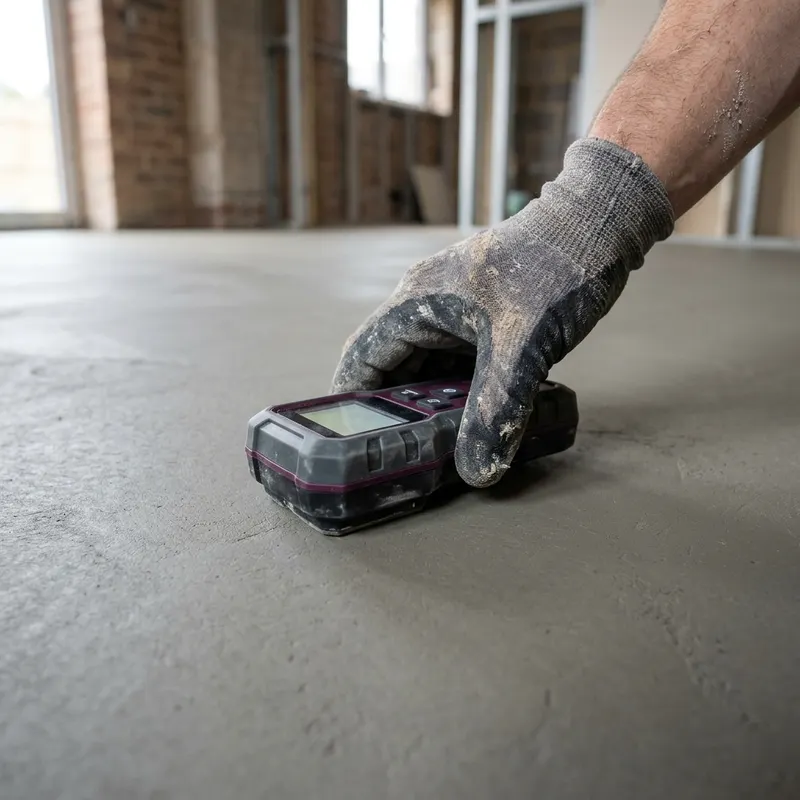
Gloved hand pressing a handheld moisture meter onto a screed floor

2. Tramex testing

What it measures
A fast, non-destructive indication of moisture near the surface of the screed, using a Tramex meter.
When you need it
For quick surveys across large areas to find wetter zones and decide where to carry out CM or RH tests.
Standards and guidance
An indicative screening method only; results should be used as guidance, because the meter reads the surface and the screed may be wetter lower down. It is not a substitute for CM or RH testing.
Your report
A moisture map of the area showing relative readings and the locations recommended for confirmatory testing.
How CSC helps
We use Tramex to target testing where it matters, saving time without relying on it for the final answer.
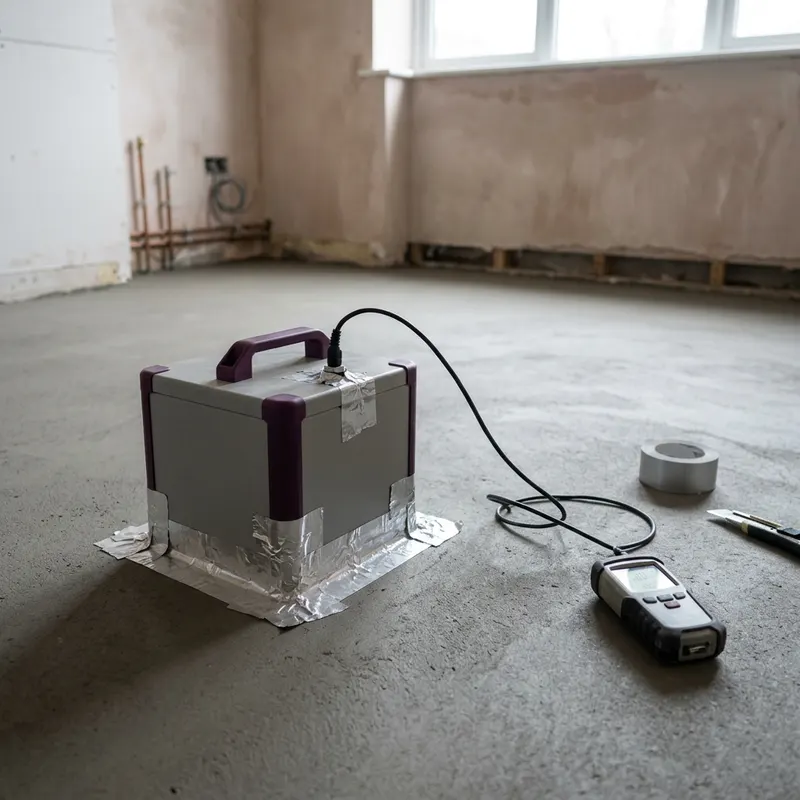
Insulated humidity hood sealed to a screed floor with a cable to a handheld reader

3. Relative Humidity (in-situ RH) testing

What it measures
The relative humidity of air held in equilibrium with the screed, showing how much moisture the screed is still giving off.
How it works
An insulated hood (hygrometer) is sealed to the screed surface and left to settle before the reading is taken and recorded with temperature and conditions.
When you need it
Where floor covering or adhesive manufacturers specify an RH limit before laying.
Standards and guidance
Acceptable limits come from the screed, adhesive and floor-covering manufacturers.
Your report
Hood locations on a plan, RH and temperature readings, settling time, site conditions (heating, ventilation) and photographs.
How CSC helps
We seal hoods properly, keep conditions steady, test in slow-drying spots (corners, thicker sections, poorly ventilated rooms) and explain what the readings mean for your programme.
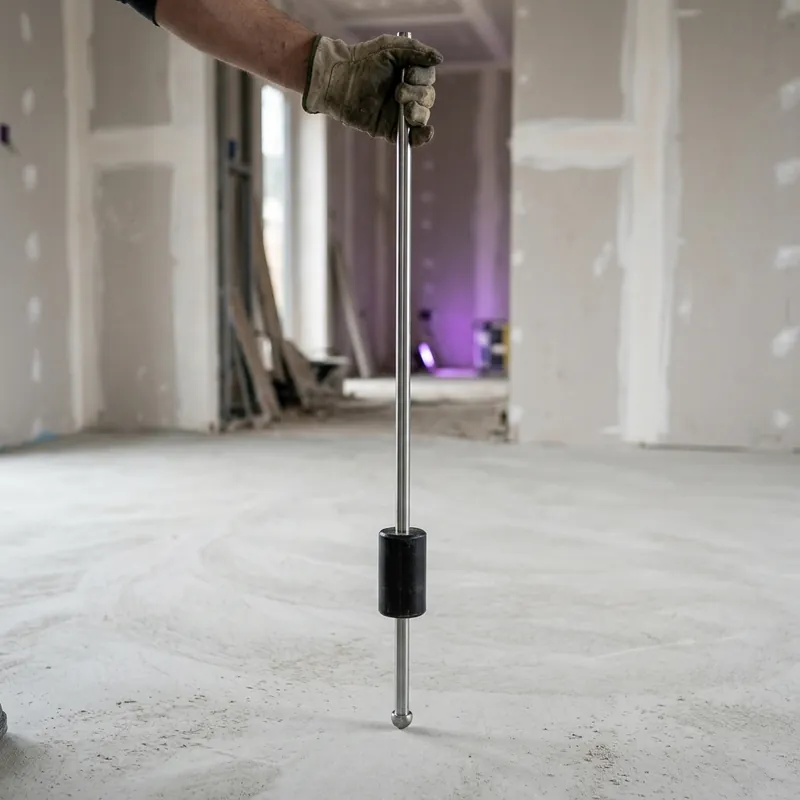
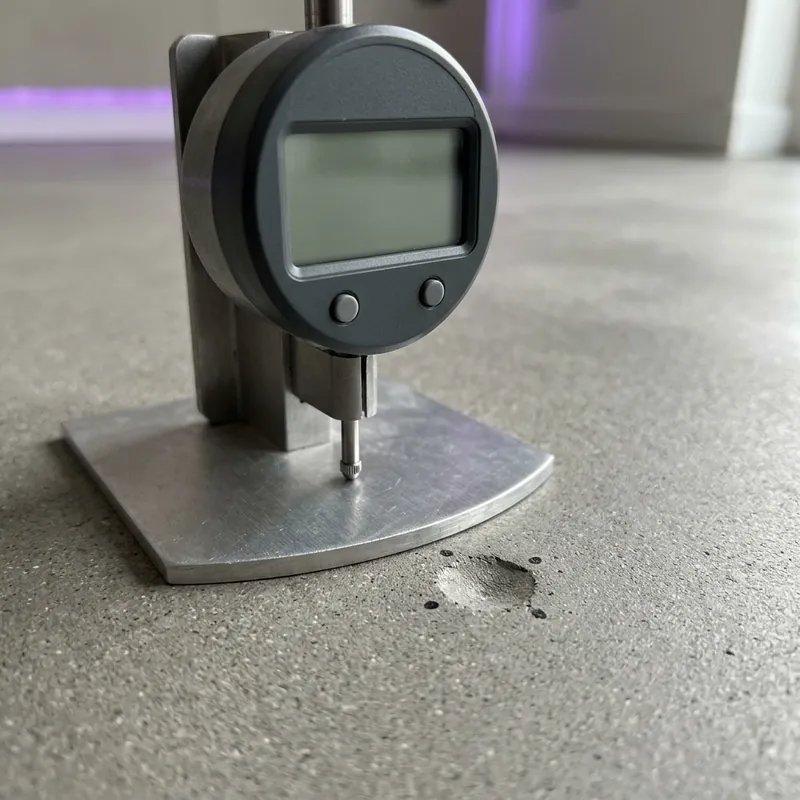
Drop hammer tester, a steel rod with a sliding black weight, held upright on a finished, dry screedDial indicator gauge on an aluminium base measuring a drop hammer indentation in a finished, dry screed

4. BRE Drop Hammer testing

What it measures
The soundness (in-situ crushing resistance) of the screed surface, by dropping a standard weight onto the screed and measuring the indentation.
When you need it
Before heavy traffic, MEWPs or follow-on trades load the floor, where a screed is suspected of being weak or poorly compacted, and as quality assurance before handover.
Your report
Test positions, indentation readings, the category achieved against the specified category, and photographs.
How CSC helps
We tell you whether the screed is strong enough for its intended use and, if not, the options for remedial work.
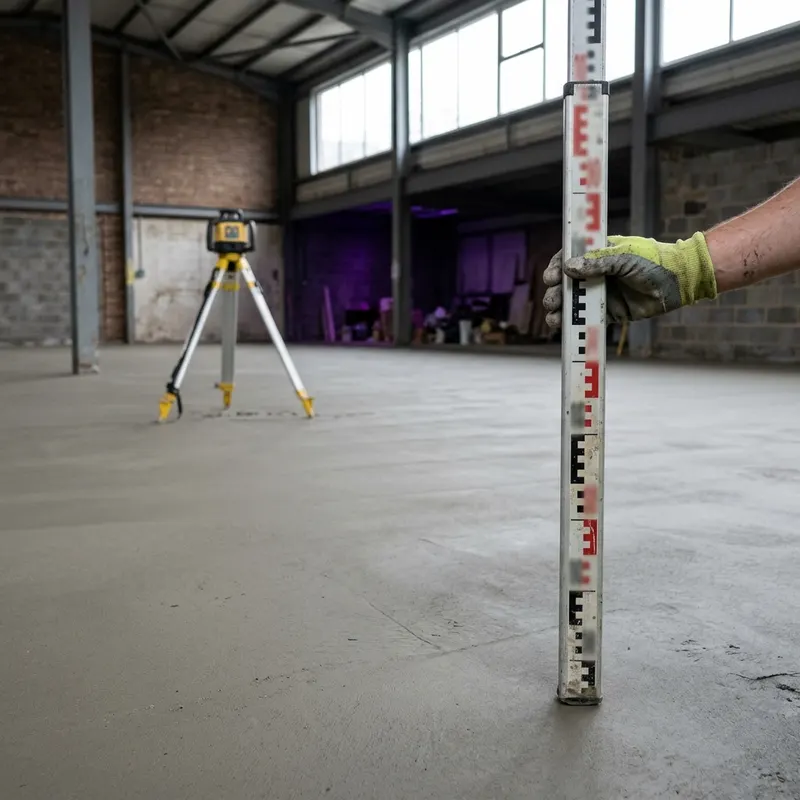
Levelling staff held on a screed floor with a laser level on a tripod behind

5. Departure from datum survey

What it measures
Level: how far the screed surface is above or below the design datum level across the floor.
When you need it
Where finished floor levels matter, such as thresholds, lift entrances, door openings, adjoining floors and raised access or tight finish build-ups.
Standards and guidance
Level is not the same as flatness: a floor can be flat but at the wrong level, or at the right level but not flat.
Your report
A grid survey of levels against datum, with readings plotted on a plan and areas outside tolerance highlighted.
How CSC helps
We survey the floor and give clear, plotted results you can share with the design team.
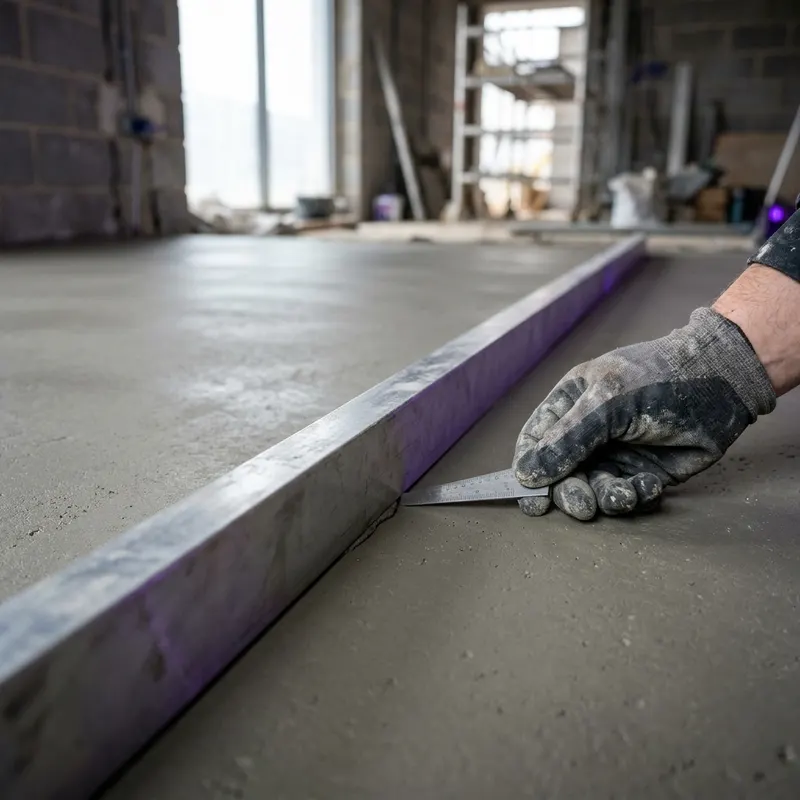
Straightedge laid on a screed floor with a measuring wedge slid underneath

6. Surface regularity testing

What it measures
Flatness: the deviation of the screed surface beneath a straightedge laid on the floor.
When you need it
Before thin floor finishes such as vinyl, resin and timber, where high spots and dips show through or cause problems, and to confirm a screed meets its specified surface regularity class.
Standards and guidance
Criteria vary by screed and flooring type, so we always test to the particular specification.
Your report
Measurement positions, deviations recorded, the class achieved against the class specified, and remedial recommendations for any non-compliant areas.
How CSC helps
We measure to your specification and, where needed, advise on remedial measures such as grinding or levelling.

How it works

  1. 1. Enquiry

    Tell us about the project, the screed type, the floor finish and the tests you need. Not sure? We’ll recommend the right ones.

  2. 2. Site test

    We visit site, carry out the tests and record locations, readings and conditions.

  3. 3. Report

    You receive a clear written report with readings, plans, photographs and our recommendations, ready for the flooring contractor and your handover file.

Book a Screed Test

FAQ

Which moisture test should I use?

It depends on what the screed, adhesive and floor-covering manufacturers accept. The CM test measures the screed itself and is preferred by many proprietary screed manufacturers; RH hood testing is often specified by flooring manufacturers. We’ll advise which suits your project.

Is a Tramex reading enough to lay a floor?

No. A Tramex meter gives a quick surface indication and is useful for finding wet areas, but it should only be used as guidance. Confirm with a CM or RH test before laying a moisture-sensitive finish.

What’s the difference between datum and surface regularity?

Datum is about level: is the floor at the right height? Surface regularity is about flatness: are there bumps and dips under a straightedge? A floor can pass one and fail the other, so they’re tested separately.

Why does the screed take so long to dry?

Drying depends on screed type, thickness, temperature, ventilation and humidity. Cold, damp or poorly ventilated spaces slow it down. Testing tells you where the floor actually is, rather than relying on a date on the programme.

What do I get at the end?

A written report with test locations on a plan, readings, conditions, photographs and clear recommendations, giving everyone a shared record of the floor at handover.

Handover ready for floor finish.

Certainty Delivered. Book a Screed Test and know your floor is ready before the finish goes down.

Book a Screed Test

Call 0330 223 2364 or email [email protected]

The perfect start to a perfect finish.