How long does screed take to dry before floor finishes?

Reviewed by Spencer Warner, former BSI committee member. Established in 1987
CSC Screeding · Last updated
It depends on the screed type, thickness and drying conditions, so there is no single answer. For calcium sulphate flowing screed, manufacturers commonly publish about 1 mm a day up to 40 mm and about 0.5 mm a day beyond that in good conditions, but the product data sheet always takes precedence, and the only proof a screed is ready for floor finishes is a moisture test.
Drying, not laying, is usually the critical path for screed. This guide explains the published rules of thumb, what slows drying, how to speed it up safely and how to prove the floor is ready.
Key facts
- Calcium sulphate flowing screed: about 1 mm a day up to 40 mm, then about 0.5 mm a day, in good drying conditions (Tarmac Topflow Screed A Eco data sheet at 20°C/60% RH; RTU Ultraflo data sheet at 20°C/65% RH).
- Worked example: a 50 mm calcium sulphate screed is about 40 + 20 = 60 days before force drying (Instarmac guidance on calcium sulphate screeds).
- Before resilient floor coverings, a base is commonly required to be below 75% RH using the hygrometer method in BS 8203, unless the flooring manufacturer specifies otherwise.
- Traditional sand and cement screed: about 1 mm a day up to 40 mm, then about 0.5 mm a day thereafter, based on lab conditions (CSC guidance, reviewed by Spencer Warner).
- Laying is fast by comparison: on average CSC lays about 400 m² of flowing screed and about 120 m² of traditional screed a day.
Rule of thumb vs the data sheet
Drying guidance comes in two layers:
- The published rule of thumb, which is useful for early programme planning before the product is chosen.
- The manufacturer's data sheet for the selected product, which varies product to product and always takes precedence.
Choose the product early so the programme is built from its data sheet, not a guess.
How long does flowing screed take to dry?
| Item | Published guidance | Source |
|---|---|---|
| Calcium sulphate, up to 40 mm | About 1 day per mm | Tarmac Topflow Screed A Eco data sheet; RTU Ultraflo data sheet |
| Calcium sulphate, over 40 mm | About 0.5 mm a day (2 days per mm) | Tarmac Topflow Screed A Eco data sheet |
| 50 mm example | About 60 days before force drying | Instarmac, calcium sulphate screeds |
| Cement-based and fast-drying flowing screeds | Varies widely; use the product data sheet | Product data sheet |
These figures assume good drying conditions. A cold, closed building in winter can be much slower.
Sources: Tarmac Topflow Screed A Eco data sheet; RTU Ultraflo data sheet; Instarmac calcium sulphate screeds PDF; BS 8203:2017; BS 8204-7; BS EN 1264-4.
How long does traditional sand and cement screed take to dry?
As a guide, traditional sand and cement screed dries at about 1 mm a day up to 40 mm, then about 0.5 mm a day thereafter. This is based on lab conditions. On site, cold, humidity, poor ventilation and wet trades can make it much slower, so plan with a margin and test before laying finishes.
| Item | Guidance | Basis |
|---|---|---|
| Traditional, up to 40 mm | About 1 mm a day | Lab conditions |
| Traditional, over 40 mm | About 0.5 mm a day | Lab conditions |
Fast-drying products and additives exist for tight programmes, with their own data sheets and costs.
Why does thickness matter so much?
Moisture has to travel up through the screed and leave through the surface. The deeper the screed, the longer the path and the slower the last part dries. That is why the drying rate for both calcium sulphate and traditional screed halves beyond 40 mm, and why specifying the thinnest screed the design allows is one of the simplest ways to protect the programme.
What slows screed drying down?
- Thickness: thicker screeds take disproportionately longer.
- Cold and humidity: an unheated, unventilated building in winter can dry far slower than the rule of thumb.
- No ventilation: the moisture has to leave the building, not just the screed.
- Covering too early: plastic sheets, boards or stored materials trap moisture.
- Wet trades: plastering and other wet work raise the humidity in the building.
- Laitance left on calcium sulphate screed: the surface skin slows drying and must normally be removed before finishes.
How can you speed up screed drying safely?
- Get the building weathertight before the pour and plan heat and ventilation.
- Remove laitance on calcium sulphate screeds at the time the manufacturer specifies.
- Use underfloor heating to help dry the screed, but only to the start time and heating-up procedure for the selected product, following BS EN 1264-4 and the screed manufacturer's instructions. Record it for the flooring contractor.
- Dehumidifiers can help in a closed building. Follow the screed manufacturer's guidance on timing.
- Choose a fast-drying product where the programme is tight, and weigh cost against the days saved.
What not to do: heat a screed hard and early, or seal it under plastic. Rapid drying can cause cracking and curling, and trapped moisture just moves the problem into the floor finish.
When can you turn the underfloor heating on?
It depends on the product. The start time and heating-up procedure vary by screed product, so follow the manufacturer's instructions and BS EN 1264-4, agree the procedure before the pour and keep a record.
How do you know screed is dry enough for flooring?
Don't go by days alone. Test it.
- Hygrometer (RH hood) test: the method in BS 8203 is the recognised test before resilient floor coverings. A commonly cited limit is below 75% RH, but the flooring and adhesive manufacturers set the limit for their products.
- Other tests: calcium carbide (CM) testing and electronic meters such as Tramex are also used. Each tells you something different, and a meter reading on its own is not proof.
- Tiling onto calcium sulphate: follow the tile adhesive manufacturer's moisture limit and primer requirements.
CSC's Screed Test service tests the screed on site and records the results for the flooring contractor. The tests we carry out are:
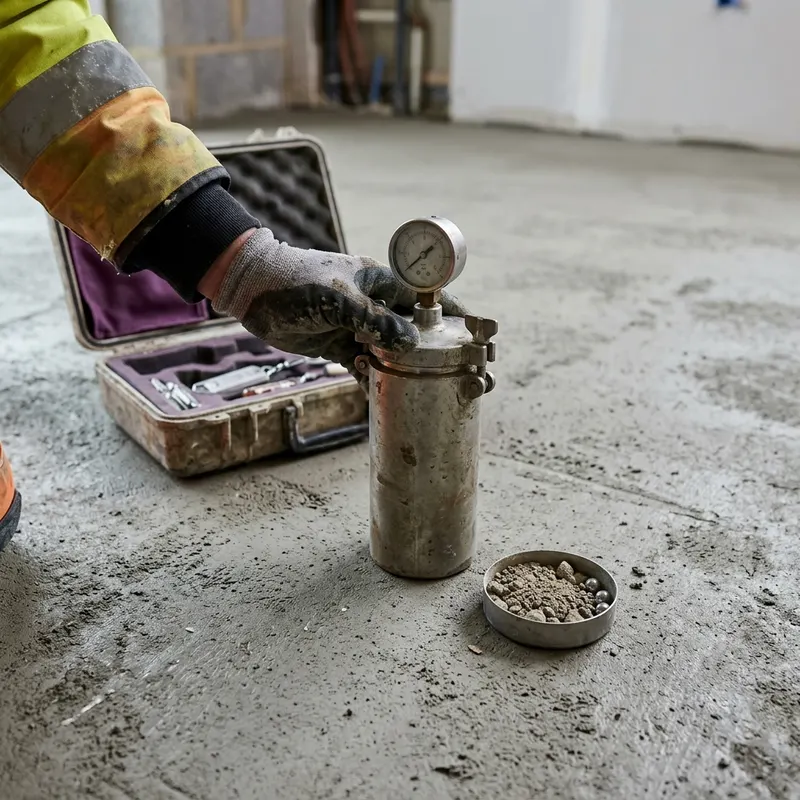 Calcium Carbide
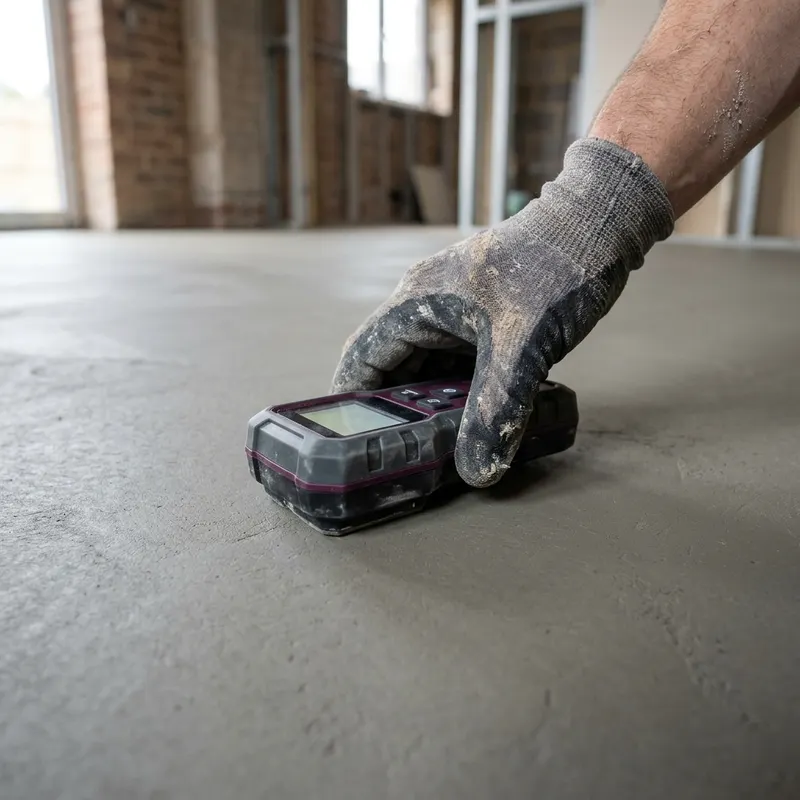 Tramex
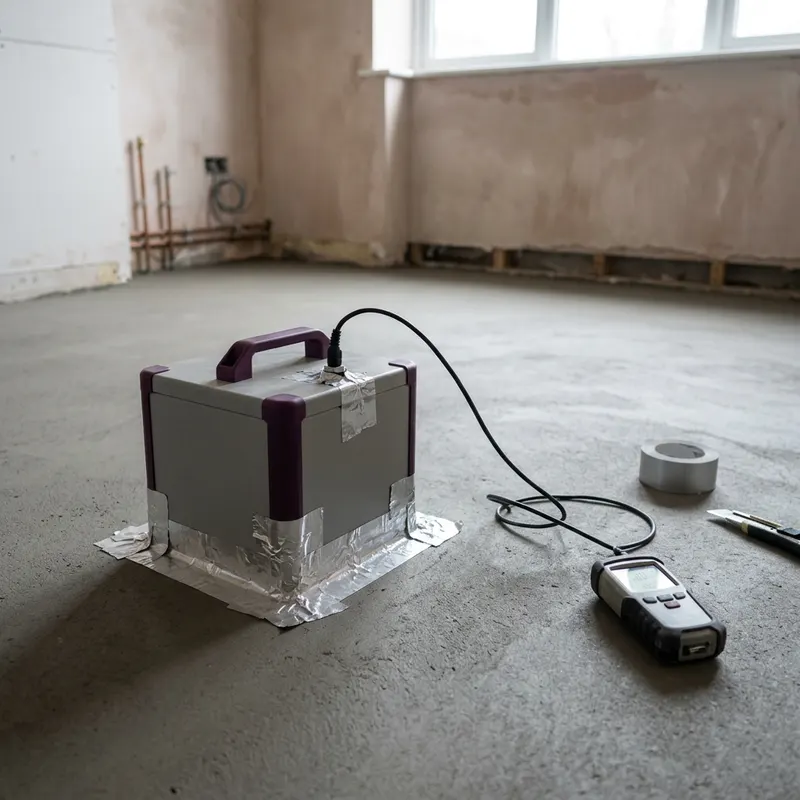 Relative Humidity
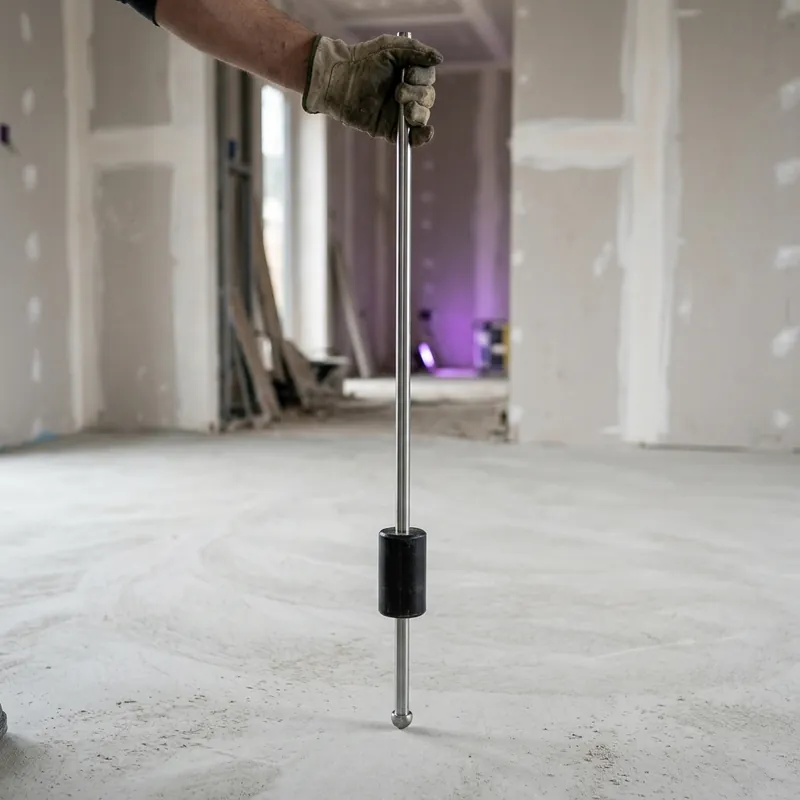 BRE Drop Hammer
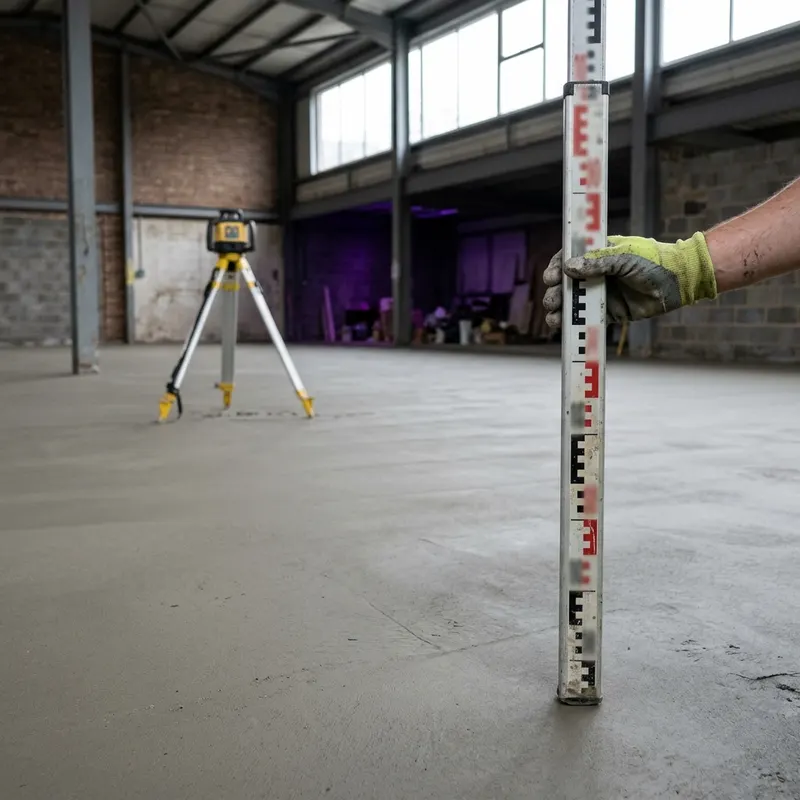 Departure from Datum
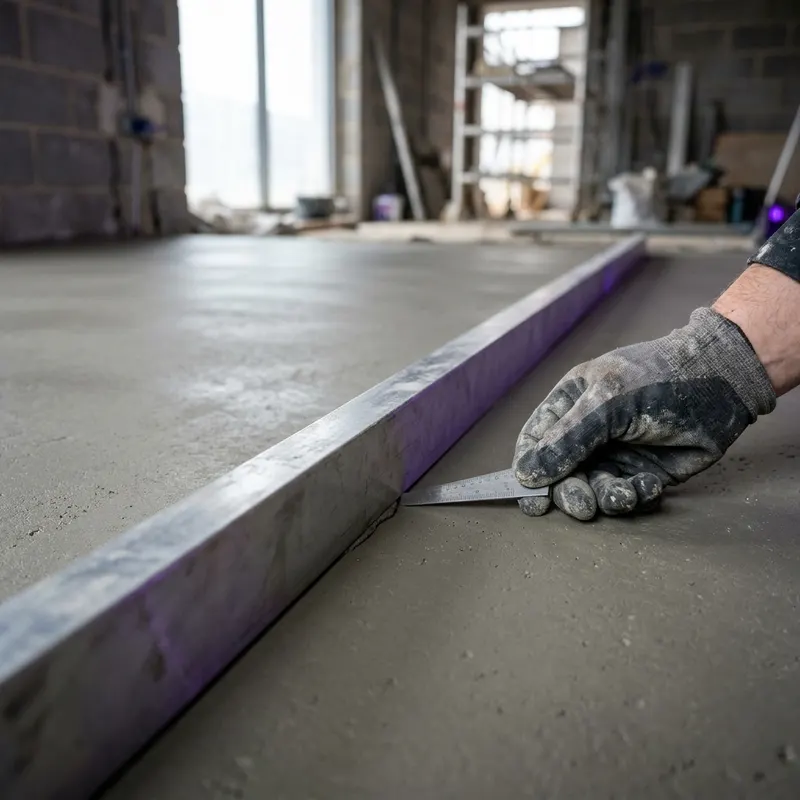 Surface Regularity
Programme tips
- Select the screed product early and plan from its data sheet.
- Specify the thinnest screed the design allows.
- Pour into a weathertight building with a plan for heat and ventilation.
- Book UFH commissioning into the programme to the manufacturer's procedure.
- Programme moisture tests before the flooring start date, not on it.
- Protect the floor and keep it uncovered by plastic or stored materials.
Laying is rarely the critical path. On average we lay about 400 m² of flowing screed a day, so the floor goes down quickly; it is the drying that needs planning.
When is a drying-time estimate not enough?
If the flooring is moisture-sensitive (timber, LVT, resin, large-format tiles) or the programme has no slack, an estimate from days alone is a risk. Test, and get the results in writing. That is the difference between hoping a floor is ready and proving it.
On site with CSC
On Brentford Waterside Phase 2a for Ballymore, preparation and screed sign-offs were recorded in the client's digital quality system level by level, so the next trade had a record before moving in.
Frequently asked questions
How long does screed take to dry?
It depends on the type, thickness and conditions. For calcium sulphate flowing screed, data sheets commonly quote about 1 mm a day to 40 mm and about 0.5 mm a day beyond, in good conditions. Traditional screed is about the same, based on lab conditions. Always use the product data sheet and test.
How long does a 50 mm liquid screed take to dry?
Using the published rule of thumb for calcium sulphate screed, about 60 days in good conditions before force drying. Check the product data sheet and test before laying finishes.
Can I use underfloor heating to dry screed?
Often, yes, but only to the start time and heating-up procedure for the product, following BS EN 1264-4 and the manufacturer's instructions.
How do I know screed is dry enough for flooring?
Test it, typically with a hygrometer to the BS 8203 method. A commonly cited limit is below 75% RH, but the flooring and adhesive manufacturers set the limit.
What slows screed drying?
Thickness, cold, humidity, poor ventilation, wet trades and covering the screed too early.
Does liquid screed dry faster than traditional screed?
Not necessarily. Traditional screed is about 1 mm a day up to 40 mm then 0.5 mm a day thereafter (lab conditions), similar to the published rule for calcium sulphate. Product, thickness and site conditions matter more than the screed type.
Send us your drawings and programme and we will price your job properly.
Get a Quote