Underfloor Heating Vs Radiator Heating System
June 2014
Underfloor heating (UFH) which was once perceived as a luxury add-on, is fast becoming a standard feature for new homes and an attractive value addition for the older ones. The reasons for the surge in popularity – cost and energy efficiency, pleasant and comfortable heating, low running costs and compatibility with renewable energy sources.
UFH – The Basics
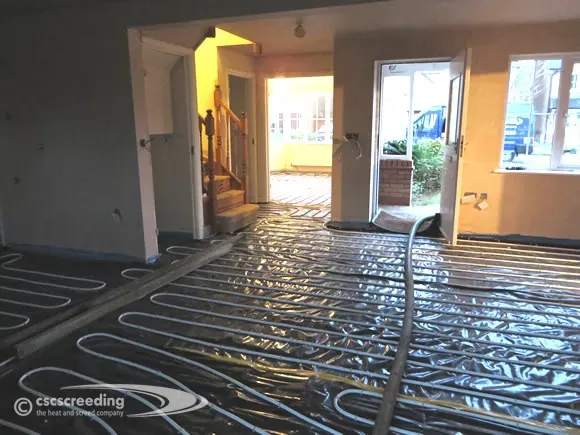
Underfloor heating works by generating heat through a series of metal/plastic pipes or electric cable mats set beneath the screed under the flooring. For the wet/hydronic UFH system, the hot water pipes are connected to a boiler, and for the electric/dry UFH the cables are connected to the power supply grids.
Both the systems work by using the floor as the medium of heat transfer, conducting the heat through the screed to the floor top and radiating the warmth upwards.
The Edge over Radiators
Cost and Energy Efficient: Where radiators require water to be at a temperature of 85°C, Underfloor Heating can provide ambient heating with a water temperature of 35°– 45°C (provided the building is suitably insulated). UFH is 30% cheaper to run than conventional gas/electric heating systems.
Pleasant Warmth: Radiators warm the room by convection heating – heating the air from the ceiling downwards – leaving hot/cold spots. UFH works by radiating the heat evenly from the floor upward, maintaining a pleasant and even temperature. UFH keeps the room warmer for longer, even after the heating has been switched off.
Design Freedom: One of the most attractive features of underfloor heating is the freedom from bulky wall mounted radiators¸ freeing up wall space and allowing for cleaner lines.
Compatible with Different Floor Types: The versatile nature of underfloor heating makes it suitable to be used with a wide variety of floor materials like stone, laminates, timber, tiles, carpets (less than 1.5 togs).
Compatibility with Renewable Energy sources: It works efficiently with renewable energy sources such as ground source heat pumps, solar power and biomass boilers.
Underfloor Heating Vs Radiators: A Comparison
Type of Heating Pros Cons
Underfloor Heating(Water and Electric)
Better energy efficiency and lower running costs
Low operating temperature and pleasant uniform heating
Can be used with most floor types including carpet
Concealed away from sight, freeing up wall space and adding a sense of spaciousness
Noise free
Reduces the movement of airborne allergens as it generates very little convection currents
Requires minimal maintenance
Slower warm-up speed
Sometimes not suitable for existing homes. But micro pipe systems are now available for refurbishment projects.
Radiators
Faster warm-up speed
Suitable for new and existing homes
Heats by convection – warming the air from the ceiling down
Higher running costs
Limits room space with wall mounted radiators
Circulates dust and mites causing allergies
Underfloor heating clearly has its advantages over the conventional gas and electric heating systems. However, the design and prices vary depending on various factors such as the type of flooring, ceiling height, age and level of insulation of the building.
To know if underfloor heating is the right choice for your home, and to get a customized quote, please call our HomeScreed team at 0330 223 2364